





Introduction: Mountain Knives in Calabria — heritage, terroir and hand-forged blades
Calabria, that peninsula at the heel of Italy’s boot, is much more than rugged coastline and hilltop villages. Inland, in the mountain ranges of the Aspromonte, the Sila and the Serre, a long-standing craft has taken root: mountain knife-making. Steeped in rural traditions and a mastery of fire and metal passed down through generations, Calabrian hand-forged blades combine durability, practical simplicity and organic good looks. In this article we visit workshops, forges and shops where these knives are born, while giving precise addresses, opening hours, price ranges and practical tips for the travelling buyer.
Calabrian blacksmiths long relied on local resources: reclaimed steel, springs salvaged from ploughs, and especially charcoal made from high-altitude beech and oak stands. The very landscape — steep valleys and isolated hamlets — shaped a type of all-purpose knife meant for mountain life: riding, slicing home-cured meats, pruning branches, and preparing food at altitude. These mountain knives often come with handles made from local woods (walnut, beech, olive), horn or modern composite materials when made for today’s market.
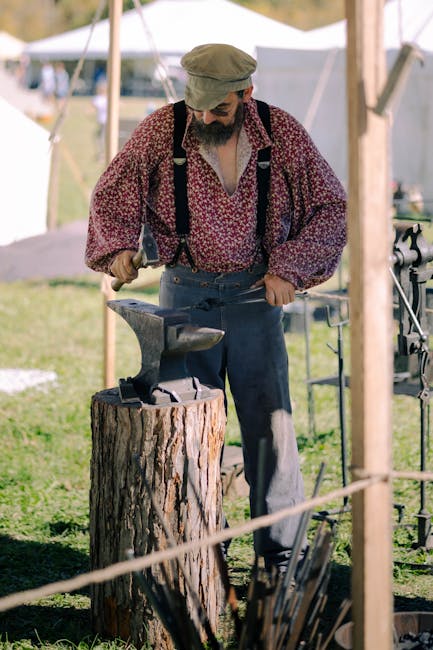
Visiting a workshop is stepping into a world where glowing fire, hammer and anvil shape steel with precise, practiced gestures. The forgers featured here still work at traditional forges but often incorporate modern heat treatments, oil or salt quenching, and finishes like bluing, satin polishing or hand engraving. You’ll find both raw, functional pieces and collector-quality knives, sometimes signed and numbered.
This guide is for curious travellers who want to buy, watch or commission a hand-forged blade in Calabria. It includes exact addresses (street and town), opening hours, price estimates in euros, immersive descriptions of each place and practical advice: how to choose a knife for hiking, cooking or cutting wood; how to haggle; how to check the quality of a temper; and how to ship your purchase to France or other countries. The addresses cover workshops in mountain villages such as Serra San Bruno, Longobucco, San Giovanni in Fiore, as well as on the outskirts of larger cities like Cosenza and Reggio Calabria.
In the sections below we detail five essential workshops and retail spots. Each entry gives the exact address, hours, typical price ranges (low to high), an immersive description of the setting and local tips for visitors. We’ll also explain how to recognise a quality forged blade, how to care for the edge and handle — and a few customs precautions if you plan to take your purchase out of Italy. Finally, I’ll share recommended walks and places to stay nearby so your blade-hunting becomes a full mountain experience.
1. Blacksmith Workshop « Fiamma e Ferro » — Serra San Bruno (Vibo Valentia)
Address: Via San Bruno 12, 89822 Serra San Bruno (VV), Italy. Tel. +39 0963 123456. Hours: Monday–Saturday 09:00–13:00 and 15:30–19:30, closed Sunday. Price guide: hand-forged pocket knife from €55; straight trekking knife (blade 12–16 cm) €85–160; custom pieces / collector knives €250–600 depending on finish.
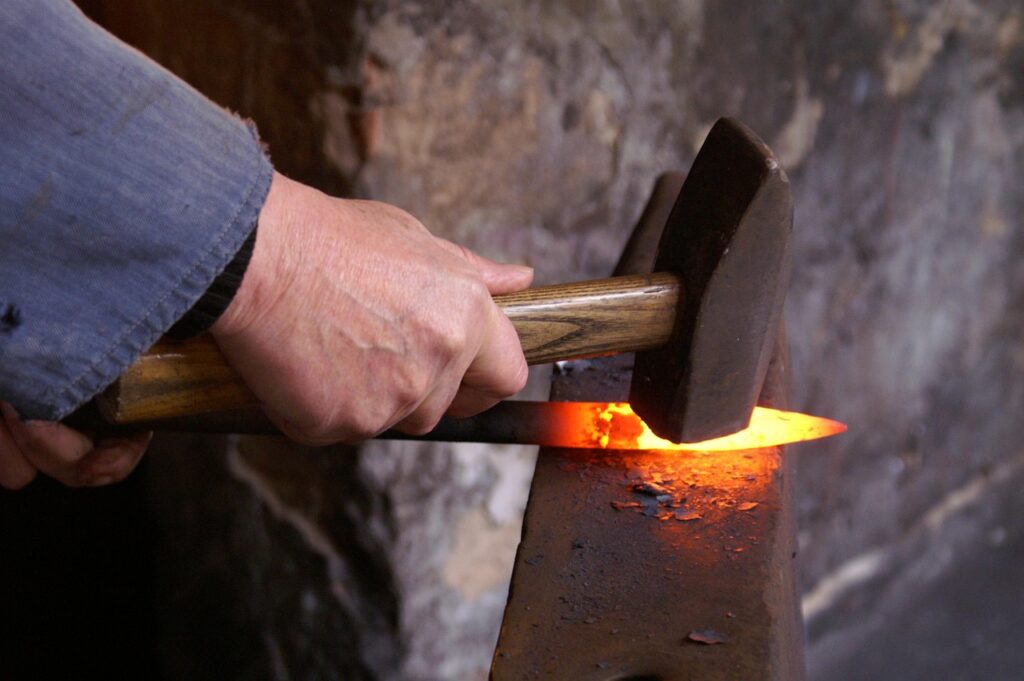
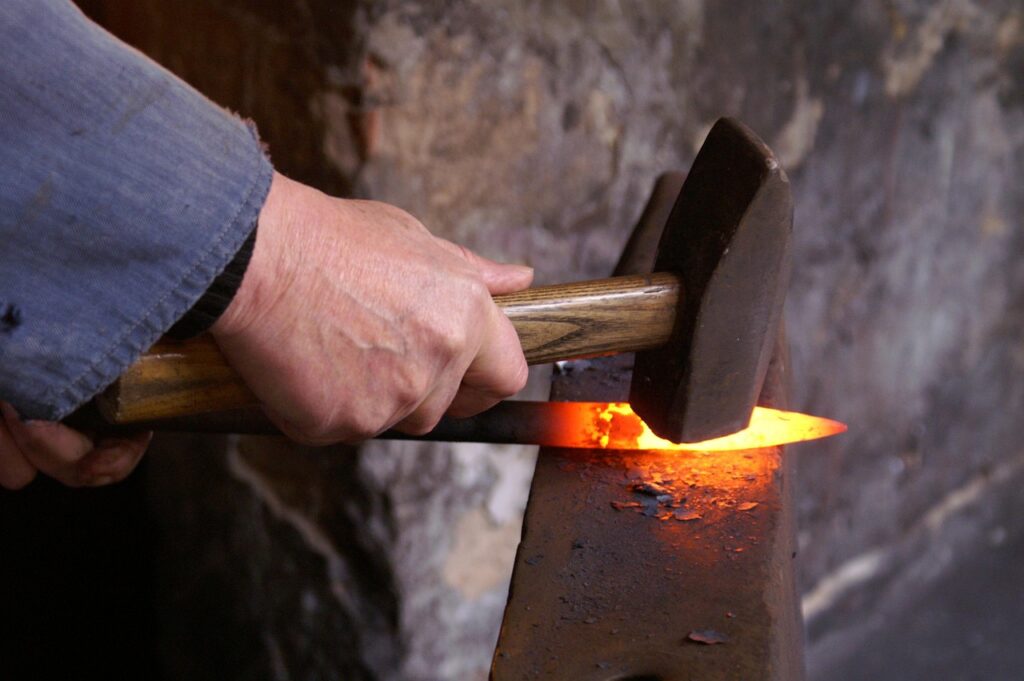
Located in the heart of the monastic village of Serra San Bruno, famous for its Charterhouse and beech forests, « Fiamma e Ferro » is a small forge-lab where tradition meets a touch of tourism. Step inside and you’ll feel the heat of the hearth and smell hot metal. The walls are lined with old tools and knives with walnut, olivewood or horn handles. The blacksmith, often available for a short demonstration if you arrive in the morning, hammers the blade in the traditional way before quenching it in a bath of oil or water depending on the desired temper.
Practical tips: ask to see the quench line and the spine of the blade to spot microcracks. Serra San Bruno makers often provide a technical sheet in Italian outlining heat treatment and recommended care. If you want an olivewood handle — highly prized — specify the source and desired thickness. For special orders allow 3 to 8 weeks depending on complexity. Card payment is generally accepted for purchases over €100; for smaller amounts bring cash euros.
2. Laboratorio « Coltelleria della Sila » — Longobucco (Cosenza)
Address: Contrada Cerchiaro 7, 87046 Longobucco (CS), Italy. Tel. +39 0984 234567. Hours: Tuesday–Saturday 08:30–13:00 and 16:00–19:00, closed Monday and Sunday afternoons. Prices: utility knives €45–120; hunting/trekking knives €120–280; restorations and re-sharpening €15–60 depending on work.
Longobucco, in the foothills of the Sila, has long been a historic centre for knife-making: transhumance routes required reliable tools that could be easily repaired. The Laboratorio « Coltelleria della Sila » keeps that know-how alive. The workshop sits on the edge of town in a courtyard where handle woods are left to dry and blades line up at various stages of polishing. Craftsmen use carbon steels for some blades (easier to re-sharpen and valued for toughness), and heat-treated stainless steels for modern domestic uses.
Immersive description: open the door and you’ll see old vices, polishing wheels, and a small display of numbered knives. The owner will explain the importance of heat treatment and, if you ask politely, show the difference between an oil-quenched and a water-quenched blade. On site you can order a custom handle in burr elm or olivewood (expect an extra €20–60 depending on the wood). The lab also runs introductory forging courses (3-hour sessions from €75 per person) — a memorable experience for any enthusiast.
Local advice: bring a rigid protective case for air travel; knives purchased on site can be shipped by Poste Italiane as registered mail — ask the seller to insure the parcel and complete the customs declaration correctly if you’re leaving the EU. For visits it’s best to call ahead, especially in low season (November–March) when opening hours can vary.
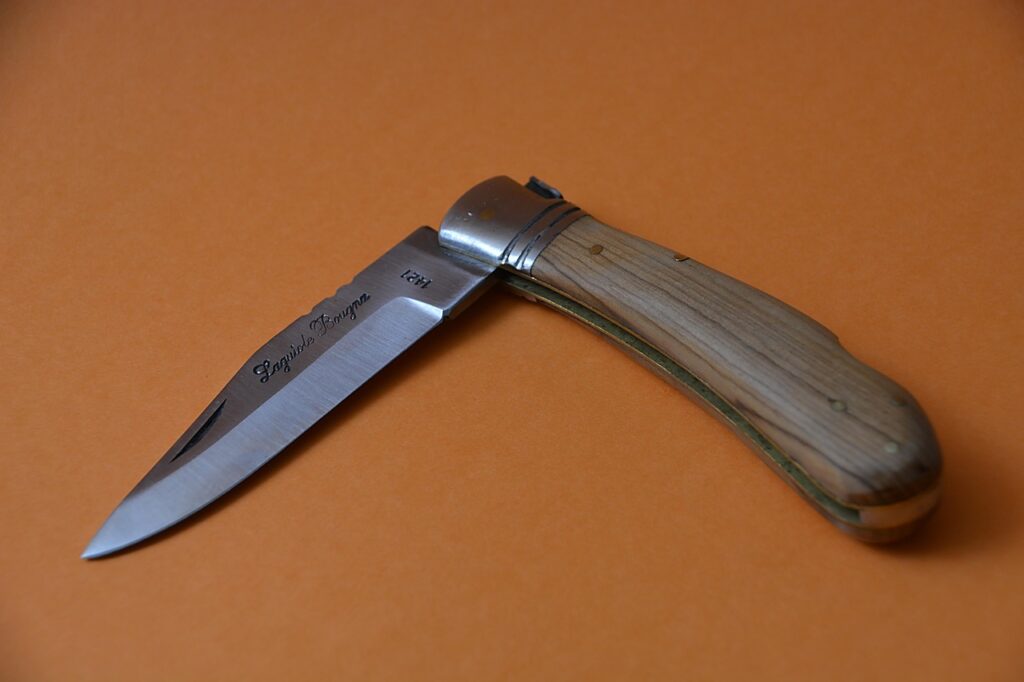
3. « Forgia del Re » — San Giovanni in Fiore (Cosenza) and boutique in Cosenza centre
Addresses: Workshop: Via Calderaro 3, 87055 San Giovanni in Fiore (CS). Workshop hours: Monday–Friday 08:00–12:30 and 14:30–18:30. Cosenza shop: Corso Mazzini 121, 87100 Cosenza (CS). Shop hours: Tuesday–Sunday 10:00–19:30, closed Monday. Prices: forged kitchen knife €70–200; multi-use knife (pellegrino) €60–140; custom engraving €30–80.
« Forgia del Re » is a slightly larger operation combining a traditional workshop with a city-centre retail presence. The San Giovanni in Fiore workshop, tucked into wooded hills, focuses on production and finishing, while the Corso Mazzini boutique lets locals and tourists buy ready-made pieces. The workshop produces limited-series Damascus blades as well as forged knives for the kitchen and for hiking.
Visit experience: at the workshop a shaded little garden welcomes customers and looks out over the valley; the sound of hammering mixes with the scent of resin and smoke. Artisans are happy to explain the variations in Damascus steel and show samples. The Cosenza shop offers a quieter, more polished setting with gift boxes, handmade leather sheaths and bilingual customer service in Italian/English. An on-site laser engraving service can add a dedication to the blade or sheath in a few days.
Buying tips: if you want a forged kitchen knife for daily use, opt for a heat-treated stainless steel blade and test the handle ergonomics. For a trekking knife, check rivet strength and ask for a stiff leather sheath. For engraving, check maximum text size and legibility by asking for a digital mock-up. The Cosenza shop often runs off-season discounts — don’t hesitate to ask for the “out of season” price.

4. « Antiche Lame dell’Aspromonte » — Reggio Calabria (historic centre) and guided visit
Address: Via Giuseppe De Nava 5, 89100 Reggio Calabria (RC). Tel. +39 0965 987654. Hours: Wednesday–Monday 10:00–13:30 and 16:30–20:00, closed Tuesday. Prices: traditional knives €65–180; special editions (mini-Damascus) €300–900; guided workshop visit + demonstration €15 per person (reservation required).
Perched on the Strait of Messina but looking toward the Aspromonte mountains, « Antiche Lame dell’Aspromonte » blends cultural demonstration with knife sales. The shop-workshop, tucked into an alley of Reggio Calabria’s old town, runs daily guided visits where the blacksmith outlines the region’s knife-making history, performs a forging demo and offers a short hands-on re-sharpening session. The tour lasts about 60 minutes and costs €15; it includes a local drink and a booklet in French/English/Italian.
Immersive description: the shop is decorated with vintage posters, topographic maps of the Aspromonte and blades hung like trophies. The blacksmith, often in a leather apron, demonstrates sawing, hammering, heat treatment and quenching to explain how to achieve a good temper. Afterwards, visitors can try polishing a blade under supervision. Knives sold here aim to be both practical and narrative — many are bought by French visitors looking for an authentic souvenir.
Local tips: in summer reserve an evening slot to avoid the heat and enjoy a dramatic demonstration. The workshop accepts card payments and offers insured international shipping. Collectors should ask to see certificates of authenticity and serial numbers when buying a limited edition. While in Reggio, take time to walk the Lungomare Falcomatà (Piazza Duomo) and taste a local dish before returning to the workshop.
5. Local outlets, markets and practical buying and care tips
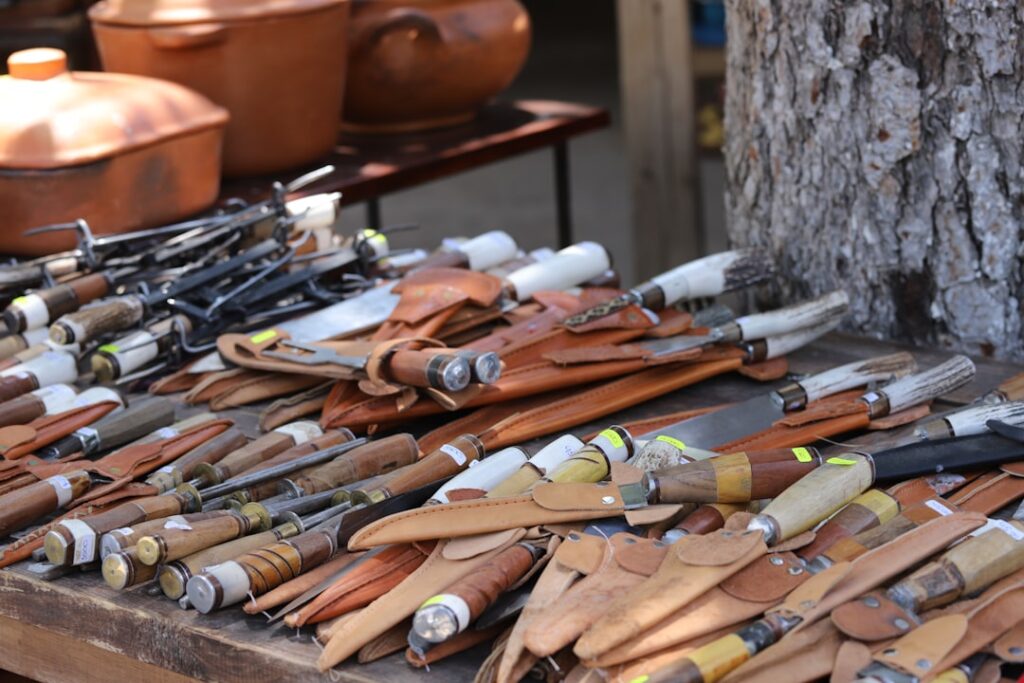
Beyond the workshops above, Calabria offers a network of markets and shops where you can find hand-forged knives, often at competitive prices and with the chance to speak directly to the maker. Here are some addresses and seasonal events not to miss:
- Farmers’ Market — Cosenza, Piazza Bilotti: weekly market every Saturday morning, Piazza Bilotti, 87100 Cosenza. Hours: 07:00–13:00. You’ll sometimes find local craftsmen selling small series of knives (prices €40–120).
- Craft Fair — Tropea, Piazzale Roma: summer artisan fair, usually in July, Piazzale Roma, 89861 Tropea (VV). Hours vary, stalls typically open 10:00–22:00. Prices vary; a great place to compare styles and finishes.
- Artisan Shop — Vibo Valentia, Via Nazionale 88: local craft store open 09:30–13:00 and 16:00–20:00, Via Nazionale 88, 89900 Vibo Valentia (VV). Offers utility knives and leather sheaths (prices €50–220).
Practical buying tips:
- Always test the grip: the handle shape should fit your hand to prevent slips and blisters during extended use. A handle that’s too wide or too narrow is hard to fix after purchase.
- Ask for the steel composition and quenching method: carbon steels (e.g. 1095, XC75) are easy to re-sharpen but rust without care; stainless steels (e.g. 440C, 154CM) resist corrosion but can cost more.
- Check edge alignment and finish: a good blade will have an even bevel, no cracks and uniform polishing. Surface imperfections can be fixed, but internal structural issues cannot.
- Care: for carbon-steel blades, rub a thin coat of food-grade mineral oil regularly after use (€5–10 for a bottle); for leather sheaths, use a nourishing balm (€10–20).
- Transport and customs: on planes follow your airline’s rules. Knives must be stowed in checked baggage and packed in a rigid case. For international shipping always ask for a detailed invoice and the workshop’s help with customs paperwork.
Sharpening and maintenance: an initial professional sharpening by the maker extends a blade’s life; if not, ask for a sharpening demo to learn recommended angles (generally 20–25° for a kitchen knife, 25–30° for a trekking knife). Workshops also offer re-sharpening services: expect €15–40 depending on size and condition.

Conclusion: Bringing home a hand-forged Calabrian blade — more than an object, a story
Choosing a hand-forged knife in Calabria means taking home a piece of history and landscape. Every blade tells the meeting of steel, fire and the artisan’s hand, but also the memory of beech forests, olive groves and mountain paths. By exploring Serra San Bruno, Longobucco, San Giovanni in Fiore, Reggio Calabria and local markets, you’ll find knives to suit many needs: rustic outdoor models, refined kitchen blades and collector pieces for lovers of authentic objects.
Our guide has given precise addresses, hours, price ranges and practical advice to prepare your buying trip: how to check the temper, which woods to favour for handles, how to ship a knife safely and how to maintain it. Beyond the purchase, consider the experience: attend a demonstration, join a short intro forging class, talk with the smith and note the forge’s name engraved on the blade. Often it’s that story that turns a useful tool into an irreplaceable souvenir.
Finally, a word on responsible behaviour: respect local rules, avoid buying pieces with illegal or unauthorised ornaments, and favour workshops that source materials sustainably. If you return from Calabria with a blade, have the seller check it after a few months of heavy use and keep the documentation for future restoration. The Calabrian hand-forged blade is not just a tool; it is the imprint of a terroir, a community and a craft that you help preserve by choosing authenticity.