





Introduction: A Deep Dive into Calabrian Traditional Weaving
Calabria, the heel of Italy’s boot, hides artisanal treasures that many travelers never discover. Among them, traditional weaving holds a special place: it’s collective memory, a craft passed down through generations, and a powerful expression of local identity. From the Ionian coast to the Aspromonte mountains, from the cobbled squares of Bova to family workshops in Reggio Calabria, looms are woven into daily life and local celebrations. Calabrian weaving goes beyond making practical objects; it tells stories, catalogs motifs, preserves colors, and embeds techniques into the very fabric of the region.
In this article I’ll take you through the secrets of Calabrian looms: how the looms are built, which traditional materials are used, the motifs and colors that define the pieces, where to visit workshops and museums, and how to join hands-on courses. I’ll point you to concrete addresses — museums, artisan studios, family botteghe — with contact details, opening hours, admission prices and visiting tips so you can plan your own weaving route through Calabria. Expect immersive descriptions: the scent of washed wool, the steady clack of the loom, skilled hands gliding the threads, and Mediterranean light revealing the texture of the fabrics.
Calabrian weaving is a bridge between past and present. Some looms remain strictly traditional — wooden shuttles, warping frames, foot pedals that set the rhythm — while other workshops innovate, blending local fibers with contemporary techniques to create utility and decorative objects now exported across Europe. I’ll also share practical tips for photographing a demonstration, buying the right piece, and spending a day learning with a master weaver. Finally, because experience beats theory, I’ll propose a sample two- to three-day itinerary that combines cultural visits, human encounters and tasting Calabrian specialties.
One important note before we start: opening hours and prices can change with the seasons and local events (patron saint festivals, temporary exhibitions). I recommend checking details with local tourist offices or official pages before you travel. Now lace up your walking shoes, open your senses — especially your eyes and hands — and get ready to discover woven Calabria.
Must-See Places to Discover Weaving: Museums, Workshops and Botteghe
Chasing Calabrian weaving means visiting cultural and human landmarks. Here’s a selection of specific addresses tried by travelers and recognized by local communities. Each spot offers a different angle — from museums that preserve archives and historic pieces to family workshops where production happens live.
-
Museo della Tessitura Calabrese – Casa degli Artigiani
Address: Via Roma 12, 88100 Catanzaro (CZ)
Opening hours: Tuesday–Sunday 09:30–13:30 / 15:00–18:00; closed Monday
Price: admission €6.50 adults; reduced €4.00 (students and 65+); free for children < 6
Description: housed in an 18th-century palace, the Museo della Tessitura Calabrese displays historic looms, samples of popular textiles (blankets, handkerchiefs, folk costumes) and a multimedia room on carding techniques and natural dyes. The explanatory panels are in Italian and English, and educational workshops are offered at weekends. The museum also organizes demonstrations with local master weavers twice a week. -
Atelier « Telai di Bova » – Laboratorio Artigianale
Address: Corso Umberto I, 46, 89034 Bova (RC)
Opening hours: by appointment, generally 09:00–17:00; workshop closed Sunday morning
Price: guided visit €8 per person; introductory workshop (3 hours) €35 materials included; one-day course €80
Description: Bova keeps strong Grecanic-Calabrian traditions visible in its motifs and colors. At Telai di Bova the Spadaro family works mainly with local sheep’s wool and weaves blankets, rugs and decorative belts. Visitors can watch foot-operated looms in action and take a short initiation to weave a small band. -
Casa-Museo Arangio Ruiz – Museo del Costume e Tessitura
Address: Via Antonio Torre, 6, 89124 Reggio Calabria (RC) – historic district
Opening hours: Wednesday–Monday 10:00–14:00 / 16:00–19:00; closed Tuesday
Price: €5.00 adults; €3.50 reduced; private guided tours €30 for groups up to 8
Description: set in a former collector’s residence, this museum showcases traditional embroidered Calabrian costumes, historic looms and audiovisual documents about rural life. The intimate atmosphere helps explain how textiles and garments punctuated social cycles (weddings, harvests, religious festivals). -
Officina dei Tessitori – Contemporary Workshop
Address: Via Marina 5, 89100 Reggio Calabria (RC) – Lungomare Falcomatà
Opening hours: Monday–Saturday 09:00–18:30; Sunday 10:00–14:00
Price: free entry; creative workshops €25–60 depending on duration
Description: more contemporary in spirit, Officina dei Tessitori blends natural fibers with modern design. The team hosts designers in residence and offers limited collections of bags, cushions and table linens that reinterpret Calabrian traditional motifs. Perfect for travelers seeking an original, tradition-rooted souvenir.
Practical tips: wear comfortable shoes; many workshops are in historic centers with cobblestones. Studio visits outside museums are often by appointment: call at least 48 hours ahead. Bring cash for artisan purchases (some small workshops don’t accept cards). If you want to take photos, always ask permission: some artisans limit images to protect unique patterns.
Techniques, Tools and Materials: Anatomy of Calabrian Looms
A Calabrian loom is not a single tool but a modular set of elements that vary by area, material and the fabric’s purpose. From the raw wool of Serra San Bruno’s heights to linen worked on the Ionian coast, materials determine loom construction.
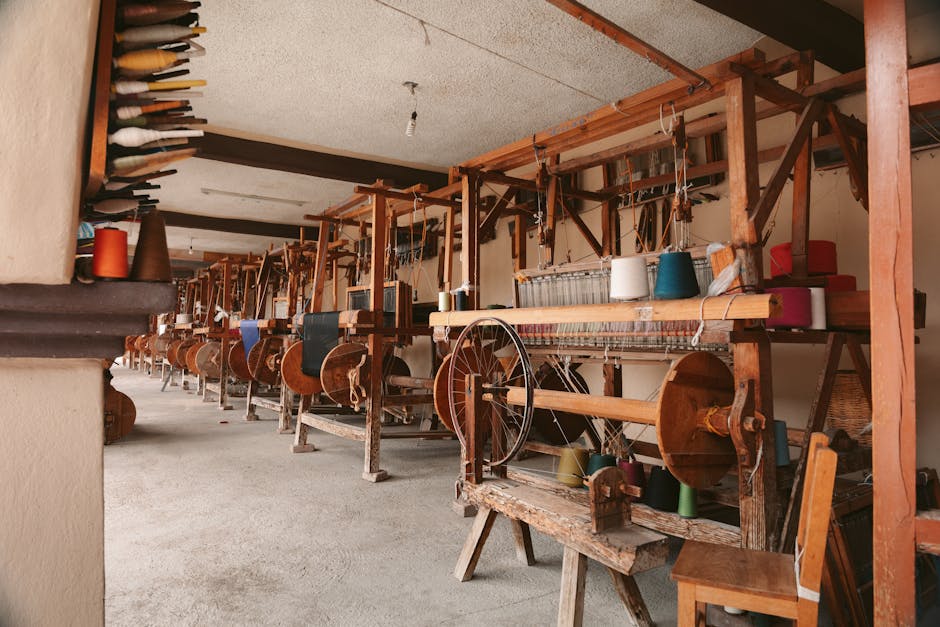
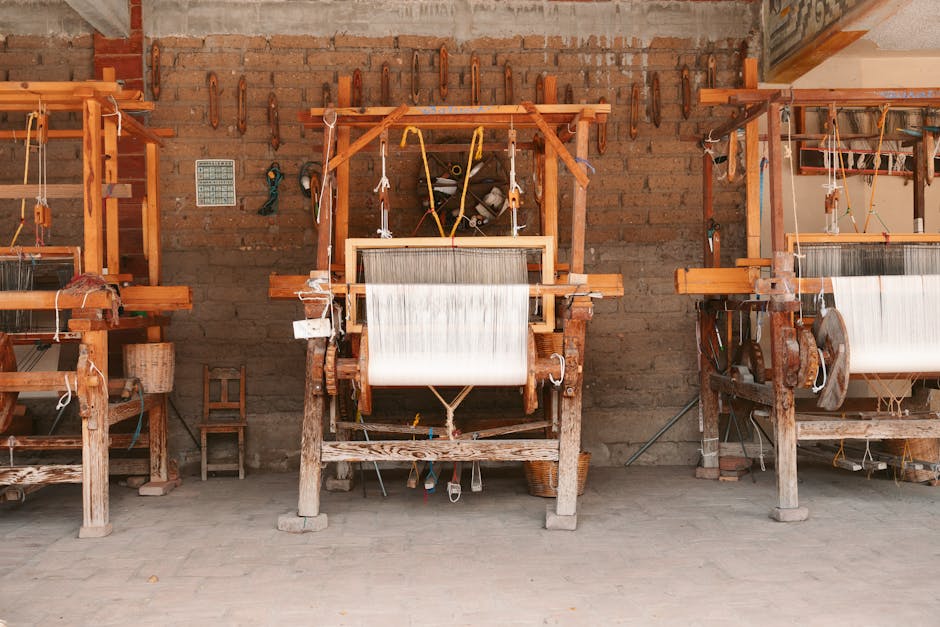
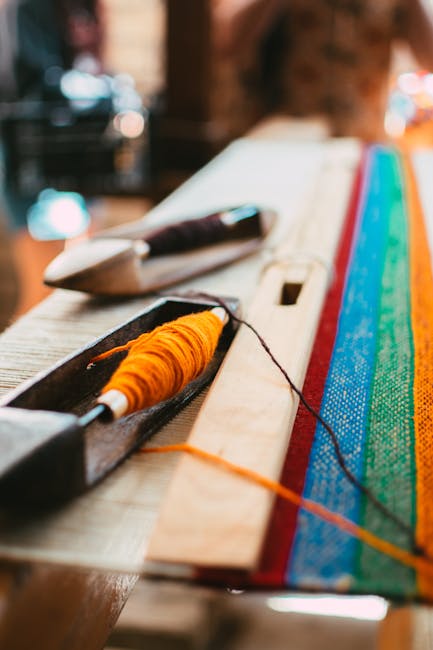
The traditional looms commonly found in Calabria include: the telaio a mano (hand loom with reed), the telaio a pedale (foot loom), and the telaio a cintura (belt loom). The belt loom is portable and fastens around the hips: it was widely used to weave belts and decorative bands. The foot loom, often made of solid wood, suits larger pieces — blankets, rugs — and enables more complex weaves thanks to pedals and multi-layered frames.
Complementary tools are equally essential: the navetta (wooden shuttle) to pass the weft, the warping board for preparing the warp, the liccio to lift threads, and the pettine in legno (wooden reed) to compact the weft. Calabrian artisans also use natural dyes: pomegranate, walnut, rhubarb roots, blackberries and olive leaves produce a palette of browns, reds, greens and yellows that recall the Mediterranean landscape. Wool is mainly local — a mixed breed from Calabrian sheep — though some workshops import cotton or linen for lighter fabrics.
The most common weaving technique in Calabria is plain weave (telaio a saia) for utility textiles, but you’ll also find intricate weaves with integrated embroidered motifs, inherited from historical contacts with Greek and Byzantine culture. Typical motifs include diamonds, stars, crosshatches and geometric bands, each carrying symbolic meanings (protection, fertility, marital status).
Learning to weave in Calabria means learning to observe: thread tension, weft spacing, pedal rhythm, and the weaver’s posture. During demonstrations, masters stress the importance of preparation: poor tension during warping ruins the piece. To start, choose a 2–3 hour introductory workshop (average €25–40) to master the basic motion before committing to a full day or a multi-day course.
Meeting the Artisans: Portraits and Addresses for Authentic Visits
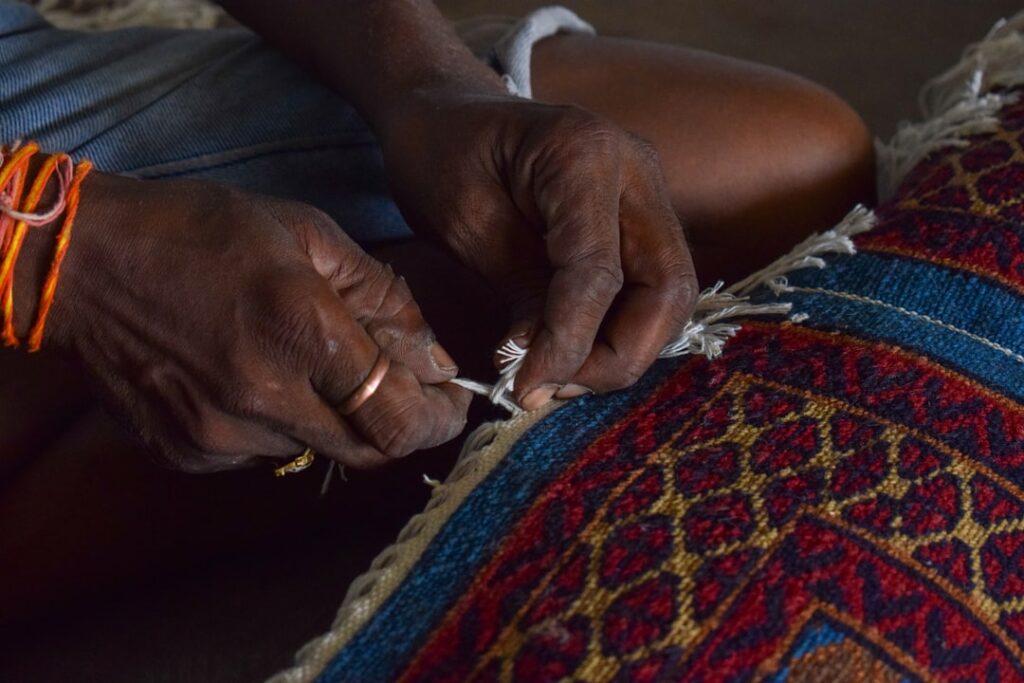
Nothing replaces meeting an artisan to understand the soul of Calabrian weaving. Here are three contemporary artisan profiles with contact details, chosen to show a variety of approaches — conservationist, social and innovative.
-
Maria Russo – Master Weaver
Workshop: Laboratorio Maria Russo
Address: Via San Rocco 11, 88046 Lamezia Terme (CZ)
Opening hours: Wednesday–Saturday 10:00–13:00 / 15:30–18:30; closed Monday and Tuesday
Contact: +39 0968 123456 (by appointment)
Price: demonstration free with reservation; introductory workshop €30 (2 hours)
Portrait: Maria continues a family tradition focused on wool and shepherds’ blankets. Her home-studio is full of skeins, antique frames and black-and-white photos. She explains how her blanket motifs tell stories of family ties and how shearing season affects wool hues. -
Associazione « Telai di Comunità » – Social Project
Address: Via XX Settembre 22, 89015 Palmi (RC)
Opening hours: Monday–Friday 09:00–17:00; workshops Saturday morning
Price: community workshops by donation (suggested €10–20)
Description: this association employs local women and refugees to teach weaving while promoting social integration. Workshops are often open to the public and allow participation in collective projects (table linens for local churches, community rugs). -
Studio Tessile Contemporaneo « Filare Nuovo »
Address: Piazza Matteotti 3, 89100 Reggio Calabria (RC)
Opening hours: Tuesday–Sunday 10:00–19:00; closed Monday
Price: entry and mini-workshops €15–50 depending on length
Description: Filare Nuovo blends traditional weaving and contemporary design. You’ll find a shop with limited pieces, a small exhibition gallery and artist residencies. Ideal to see how tradition adapts to the international market.
Tips for meetings: arrive on time and bring prepared questions; artisans appreciate genuine curiosity. If you buy a large piece, negotiate politely and ask for a certificate of origin or a receipt. For groups, give at least a week’s notice; some workshops can only host 4–6 visitors at once. Lastly, many social initiatives welcome volunteers — a great way to learn over time.
Practical Tips for Visiting, Buying and Bringing Textiles Home
Deciding to buy a textile in Calabria — a blanket, table linen or scarf — comes with a few simple rules to avoid disappointment. Here’s a practical guide — budget, logistics, transport and care — to make your experience a success.
1) Budget and prices: expect to pay about €25 for a small handwoven piece (coaster, small scarf) and €250–600 for a high-quality traditional blanket. A standard handwoven tablecloth usually costs between €80 and €200 depending on complexity. Introductory workshops range from €20 to €80, while in-depth courses can exceed €150 per day if materials and lunch are included.
2) Transport and customs: handwoven textiles fold easily and fit in luggage. For large items, consider vacuum packing (shops or local cobblers can help) to save space on flights. If you travel outside Europe, check export and import rules: most pieces in common fibers (wool, linen, cotton) aren’t problematic, but items containing rare natural dyes or organic components (feathers, leather) may face restrictions.
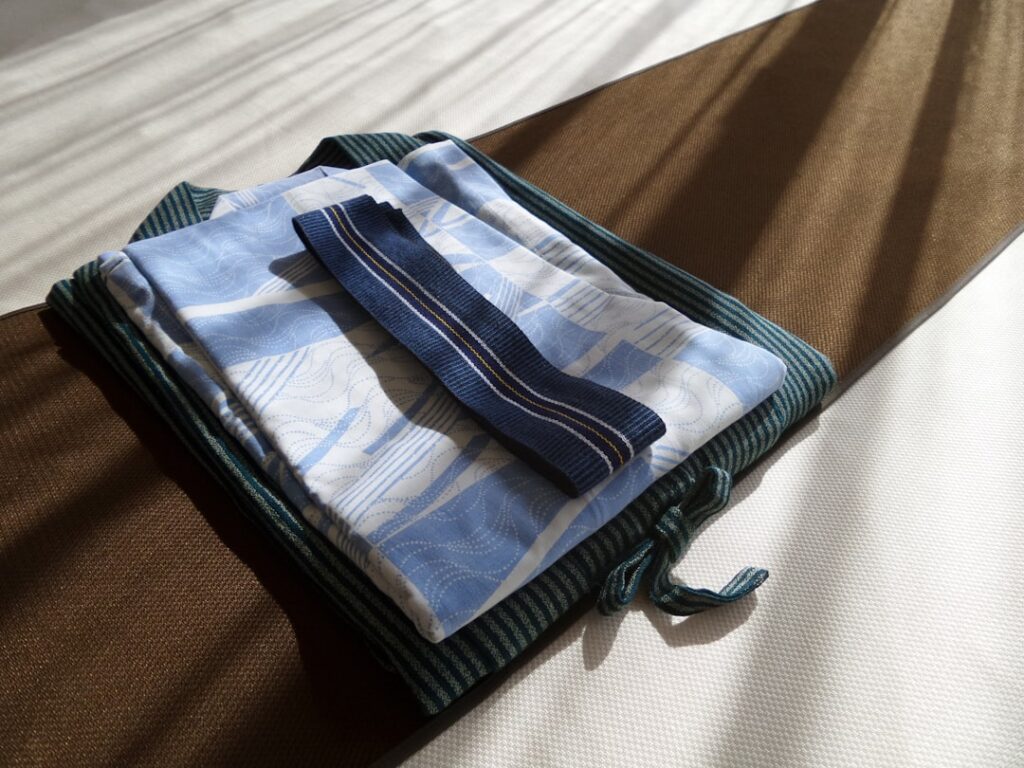
3) Authenticity and quality: always ask about fiber origin and the artisan’s signature. A certificate of origin or a small handwritten tag from the maker is a good sign. Check weave regularity (loose tension or uneven warping can indicate rushed work), the sturdiness of finishes (seams, edges), and color (natural dyes can bleed slightly on the first wash — ask for care instructions).
4) Care: for handwoven wool, favor hand washing in lukewarm water with a neutral soap, dry flat in the shade and avoid tumble dryers. Linen and cotton blends often tolerate a gentle machine wash at 30°C, but confirm with the artisan. For naturally dyed pieces, wash separately the first few times and use a color fixer if recommended.
5) Photography and souvenirs: if you want photos in workshops, always ask permission. To capture motifs, shoot close in natural light so you can reproduce details later without disturbing the artisan. Consider gifts such as small table runners, sachets filled with local lavender, and woven keyrings — popular, meaningful mementos that are easy to carry home.
Suggested Itinerary: 3 Days of Weaving Immersion in Calabria
To put these discoveries into practice, here’s a three-day route that mixes visits, workshops and tasty breaks. The loop starts in Catanzaro and heads down the Ionian coast toward the Aspromonte, focusing on places reachable by car.
Day 1 — Catanzaro and Lamezia Terme: Morning: visit the Museo della Tessitura Calabrese (Via Roma 12, 88100 Catanzaro). Allow 1½–2 hours for the permanent exhibition and the demonstration. Admission €6.50.
Lunch: Ristorante « La Tana del Cervo », Via Marconi 8, 88100 Catanzaro — local dishes €12–20.
Afternoon: 50-minute drive to Lamezia Terme and visit Maria Russo’s workshop (Via San Rocco 11). Introductory workshop available for €30; book in advance. Evening: stroll the historic center and peek at local markets.
Day 2 — Bova and the Grecanico area: Morning: drive to Bova (about 1h30 from Lamezia). Visit the Telai di Bova studio (Corso Umberto I, 46): watch hand weaving and take a short workshop (3 hours, €35).
Lunch: Trattoria da Nonna Rosa, Via Roma 4, 89034 Bova — traditional Grecanic dishes €10–18.
Afternoon: wander the village, visit the local church and browse small craft shops. Overnight in Bova or travel on to Reggio Calabria (1h15).
Day 3 — Reggio Calabria and contemporary scenes: Morning: Casa-Museo Arangio Ruiz (Via Antonio Torre, 6) guided visit at 10:00 — cost €5.00.
Lunch: on the Lungomare Falcomatà, then head to Officina dei Tessitori (Via Marina 5) to see the tradition-design fusion. Take a mini-workshop or shop for contemporary pieces.
Afternoon: visit Filare Nuovo (Piazza Matteotti 3) and enjoy free time to buy souvenirs. Return home or extend into Aspromonte for meetings with shepherds and wool producers.
Logistics tips: rent a car — mobility is essential in Calabria. Check road conditions in winter and pack closed shoes for mountain villages. Book workshops and lodging in advance, especially in high season (July–August) and during local religious festivals when rooms fill up fast.
Conclusion: Why Calabrian Weaving Is Worth the Trip
Exploring traditional weaving in Calabria is more than collecting textiles: it’s meeting people who shape a territory’s memory through an artisanal gesture. Every woven piece is a living archive: it tells of a landscape, a season, a supply chain — from sheep grazing on fragrant mountains to hands that card and spin wool in kitchens still scented with citrus. The weaving heritage of Calabria is multifaceted: museums that preserve, workshops that teach, associations that reinvent, and designers who adapt. This heritage survives through exchange — visitor, buyer, apprentice — and intergenerational transmission.
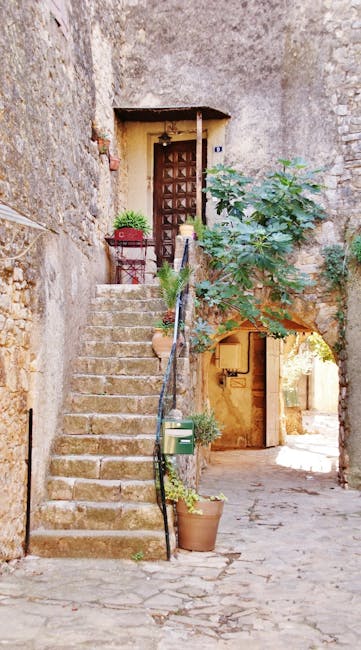
Beyond aesthetics, buying and learning local weaving supports a circular, sustainable economy. You help artisan families, social inclusion projects, and the safeguarding of practices that might otherwise disappear under industrial production. Calabria is an ideal setting for these experiences: contrasting landscapes, perched villages, a coast that inspires colors, and simple yet generous food to fuel each pause between demonstrations.
If you’re planning a weaving-focused trip, keep a few priorities in mind: arrange appointments, respect workshop rhythms, and travel curious rather than rushed. Take home souvenirs that matter: a blanket for your sofa, a tablecloth for family meals, a small scarf to remember shoreline walks. Take time to talk with artisans: a conversation can teach you more about motifs, techniques and stories than any museum panel.
Calabria is a land of feeling and resilience. Its cultural fabric is literally woven into its textiles. Bringing home a woven piece means keeping a fragment of the region close to your heart — an object that will remind you of the hands, voices, landscapes and smells you encountered. And perhaps, through that gesture, you’ll help these crafts keep beating for future generations.