





Introduction
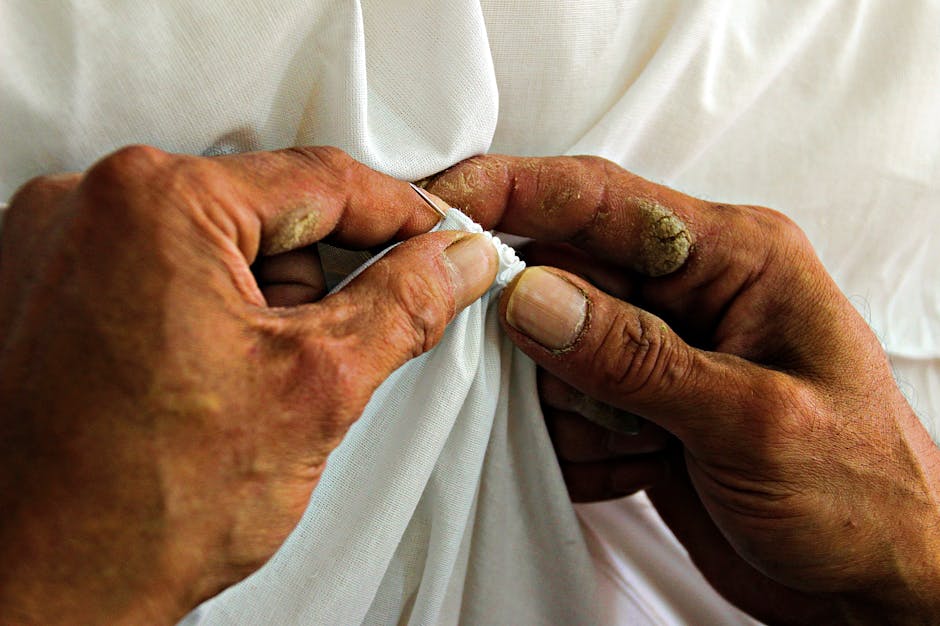
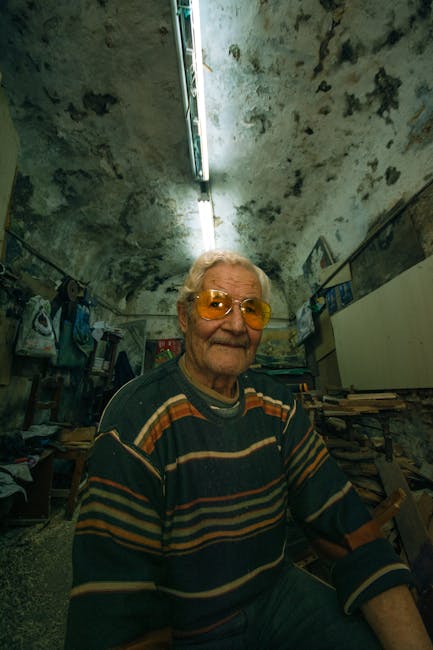
Calabria is a land of contrasts: steep mountains plunging into impossibly blue seas, villages clinging to centuries-old slopes, and plains where time seems to move with the seasons. Beneath this often harsh yet generous landscape are hands that keep traditional skills alive, passed down from one generation to the next. « Calabrian Hands: Portraits of Forgotten Artisans » invites you to look closely at these humble, stubborn gestures, to listen to the stories told by worn tools and the scuffs on old aprons. Here, modern life coexists with age-old practice not out of nostalgia but out of necessity: these trades still shape daily life, festivals, weddings and funerals.
Wandering the cobbled lanes of Tropea, the medieval maze of Gerace, the quays of Scilla and the quiet workshops of Cosenza, you’ll meet artisans often off the beaten tourist trail but essential to Calabria’s cultural fabric. There are cobblers who repair more than shoes — they restore family memories; potters who paint clay with patterns tied to rural celebrations; coral jewelers who turn the Tyrrhenian Sea’s treasures into talismans; weavers who stitch baptismal towels and the big Sunday tablecloths.
This piece does more than catalogue professions: it follows faces, lists addresses, gives opening hours for dropping in, notes prices for visits, and offers practical tips for meeting these masters of craft without disturbing their routine. You’ll find concrete information — full place names, exact addresses, prices in euros, opening times — alongside immersive descriptions meant to place each portrait in its soundscape, taste and scent. Through these pages, Calabria emerges less as a simple tourist destination than as a living conservatory of artisanal traditions. Be prepared to be moved by the simplicity of a gesture, to smell warm clay, to hear the crisp strike of a hammer on leather. These are experiences that require time and respect: knock gently, speak softly, and if you’re offered coffee, accept. You might meet an elder who will gladly tell you the genealogy of a pattern or the story of a stone found on the beach.
The portraits that follow are for curious, respectful travelers willing to give their time to understand. They suit slow itineraries, spontaneous stops, and those who prefer a family-owned shop to a standardized souvenir store. More than a guide, this text is an homage to Calabrian hands: strong, rugged, patient and often overlooked. Their stories speak of a region that refuses to forget.
The Cobblers of Tropea: Soles That Tell Stories
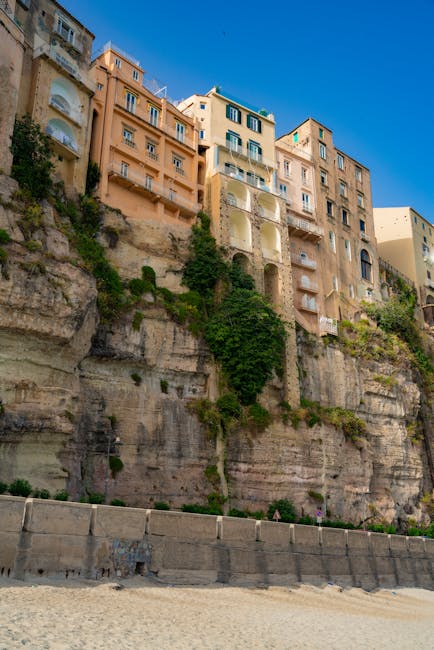
Perched on a cliff above the Tyrrhenian Sea, Tropea is famous for its old town and beaches, but less known for its craftspeople. Still, at 12 Corso Vittorio Emanuele, 89861 Tropea (VV), you’ll find the workshop « Calzolaio di Scarpette, » a small shop-workshop run by the Russo family for three generations. The precise, easy-to-find address is Corso Vittorio Emanuele 12, 89861 Tropea (VV). The workshop is open Tuesday to Sunday from 09:00 to 13:00 and 16:00 to 19:00; closed on Mondays. Simple repairs (partial resoling, heel repairs) start at €15, while a full resole can cost between €45 and €80 depending on complexity and the type of sole required. For a pair of vintage ankle boots expect €60–100 and a turnaround of 3 to 7 days.
Stepping into the workshop is like entering a world of leather and oil, punctuated by the click of machines and the hammer on the sole. Walls are lined with tools: awls, wooden lasts, pliers, and a bench that’s seen hundreds of shoe generations. Tropean cobblers don’t just fix things; they reinterpret them. You’ll often see customers asking to revive an ’80s sandal or fishermen wanting boots waterproofed for the season. The work is both practical and aesthetic: the sole becomes a promise of longevity.
Practical tips: arrive early in the morning, especially in summer, because the workshop sometimes closes earlier due to tourist traffic. If you need a rush job, ask for the « express » service (extra €10–15); for longer restorations, leave contact details and come back the next day. Bring cash: while most accept cards for amounts over €20, many prefer cash for small jobs. And take the time to chat — a cobbler will happily tell the story of a pair that crossed the Mediterranean.
Clay and Fire: Gerace Potters and Their Millennia-Old Motifs
Sitting at 545 meters above sea level, Gerace provides ideal conditions for clay: rust-colored soil, wild herbs and dry air. The workshop « Ceramiche di Gerace » is located at 4 Via San Francesco, 89040 Gerace (RC). It’s open Monday to Saturday from 10:00 to 13:00 and 15:30 to 19:30; closed on Sundays outside the high season. A guided visit usually costs €10 per person and lasts around 45 minutes; introductory workshops (throwing and electric kiln firing) are offered at €35 for 90 minutes. Handmade pieces — hand-painted plates, jars, decorative tiles — range from €20 for a small plate to €250 for a large decorated amphora.
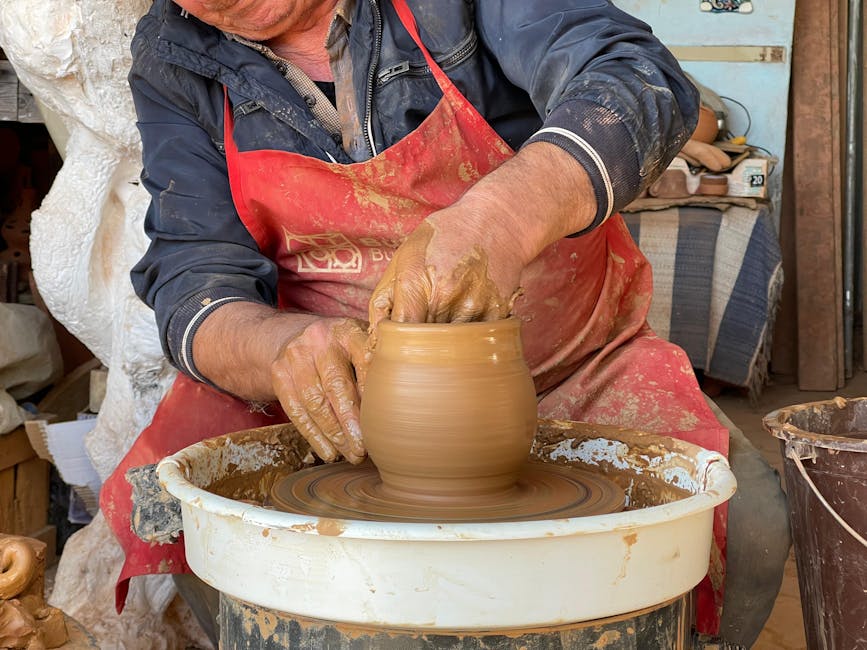
Ceramics in Gerace are more than decorative objects: they reflect the seasons and local rites. Patterns draw on religious festivals, harvests and maritime symbols. You’ll find ochres, cobalt blues and olive greens made from local oxides. The studio has a gas kiln and a small electric kiln for delicate pieces. Master potter Donato Leone welcomes visitors and explains each step: selecting clay, forming on the wheel or by coil, slow drying, glazing and final firing. He also shows archaeological fragments found nearby and explains how certain shapes have endured since Byzantine times.
Practical tips: if you want to take a fragile piece home, ask for special packing (extra €5–10) or arrange shipping with the studio; they’re used to sending parcels across Europe. If you join a workshop, wear clothes you don’t mind getting dirty and bring a plastic bag to carry your damp piece home. Potters appreciate receiving local plants or farm produce as a symbolic gift; it can create a bond that sometimes leads to a private viewing of older, unexhibited pieces.
Coral and Gold Thread: Jewelers of Scilla and Torre Faro
The tradition of coral jewelry in Calabria is ancient and especially strong in coastal towns like Scilla and Torre Faro (the Messina-side neighborhood on the Calabrian coast). In Scilla, « Gioielleria Marino » is at Lungomare Amendola 3, 89058 Scilla (RC). Opening hours: daily from 09:30 to 13:00 and 17:00 to 21:00; open year-round except December 25th. Bracelets and necklaces made with genuine red coral (Corallium rubrum) start at around €120 for a simple small necklace; pieces set in 18k gold range from €250 to €1,800 depending on weight and workmanship. In Torre Faro, the workshop « Corallo & Mare » is at Viale Regina Elena 54, 98057 Torre Faro (ME), open from 10:00 to 13:00 and 16:00 to 20:00; closing times vary in low season. Consultations for custom designs generally cost €20–30 (often deductible from the final price if you place an order).
These jewelers work with coral harvested under strict local rules and often recycle old pieces into new creations. The process begins with careful sorting, hand-polishing, then setting. Workshops are happy to show the creation stages: wet sanding, fabric polishing and final assembly. The experience is tactile and visual; coral hues range from bright red to deep pink, and each piece carries the marks of marine life. Jewelers also share local legends: talismans worn to protect from storms or given at engagement.
Practical tips: always ask for a certificate of authenticity and check the coral’s origin to avoid supporting illegal trade. For high-value purchases, insist on a detailed invoice and a warranty certificate (12–24 months depending on the shop). Artisans often accept cards for purchases over €50, but keep cash for small repairs or quick polishings (€10–30). If you want a custom order, allow 2 to 6 weeks depending on complexity and material availability.
Weavers and Embroiderers of Cosenza: Fabrics That Keep Memory
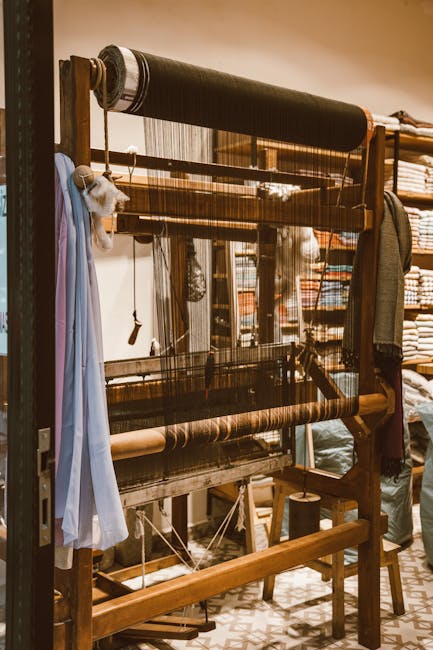
Cosenza, a city with a rich historical and academic heritage, is home to a group of weavers who still use hand-operated looms. « Telaio di Cosenza » is at 22 Via del Tirreno, 87100 Cosenza (CS). The workshop welcomes visitors and hosts introductory classes on Wednesdays and Saturdays from 10:00 to 13:00 and 15:00 to 18:00; fees: guided tour €8, introductory workshop €30 for 2 hours. Handwoven pieces — placemats and table runners — range from €25 for a simple runner to €180 for a linen tablecloth embroidered with traditional motifs. Local embroiderers preserve patterns specific to weddings and baptisms, often stitched in off-white or gold thread for major occasions.
Weaving in Calabria is as much a domestic art as a profession. Cosenza’s workshops display old looms — often made from olive wood — and explain warp and weft, thread choices (linen, cotton, wool) and the purpose of each stitch. The work is slow, often done by women who gather to weave in community, trade news and protect a repertoire of designs. The textiles show a sober, sturdy aesthetic meant to last generations.
Practical tips: if you buy linen or wool, wash it in cold water the first time to avoid shrinkage; artisans usually recommend hand washing or a delicate machine cycle. For special orders (a wedding tablecloth, for example), expect 4 to 12 weeks depending on complexity. Visitors wanting to learn should book at least a week in advance, especially during university events or local festivals. Bringing a small gift (homemade jam, local olive oil) is appreciated and can open doors to private workshops or extra demonstrations.
Conclusion
Calabrian hands shape the identity of a region that, despite modern upheavals, preserves an astonishing wealth of craft knowledge. These artisans — the cobblers of Tropea, the potters of Gerace, jewelers of Scilla and Torre Faro, weavers of Cosenza — are not mere makers of objects: they are memory keepers, silent storytellers who translate local histories into tangible items. Every workshop you visit, every repair you commission, every piece you buy supports the transmission of living heritage. The addresses provided (Corso Vittorio Emanuele 12 in Tropea; Via San Francesco 4 in Gerace; Lungomare Amendola 3 in Scilla; Viale Regina Elena 54 in Torre Faro; Via del Tirreno 22 in Cosenza) help you knock on these doors with confidence, knowing when to come.
Beyond practical details — opening hours, prices, addresses — the real value of meeting an artisan lies in the time you give them. Favor slow travel, cultivate respectful curiosity, offer conversation rather than a selfie, and always ask before photographing. Workshops are often living spaces: you’ll encounter family stories, recipes, and objects repaired for the next generation. When you leave, take home an object, a memory, but above all an understanding that these gestures sustain a whole community. Calabria, through its hands, keeps writing its story. By being an attentive visitor you help ensure these artisans are never completely forgotten.